
Why Play Belongs in Your Fitness Routine
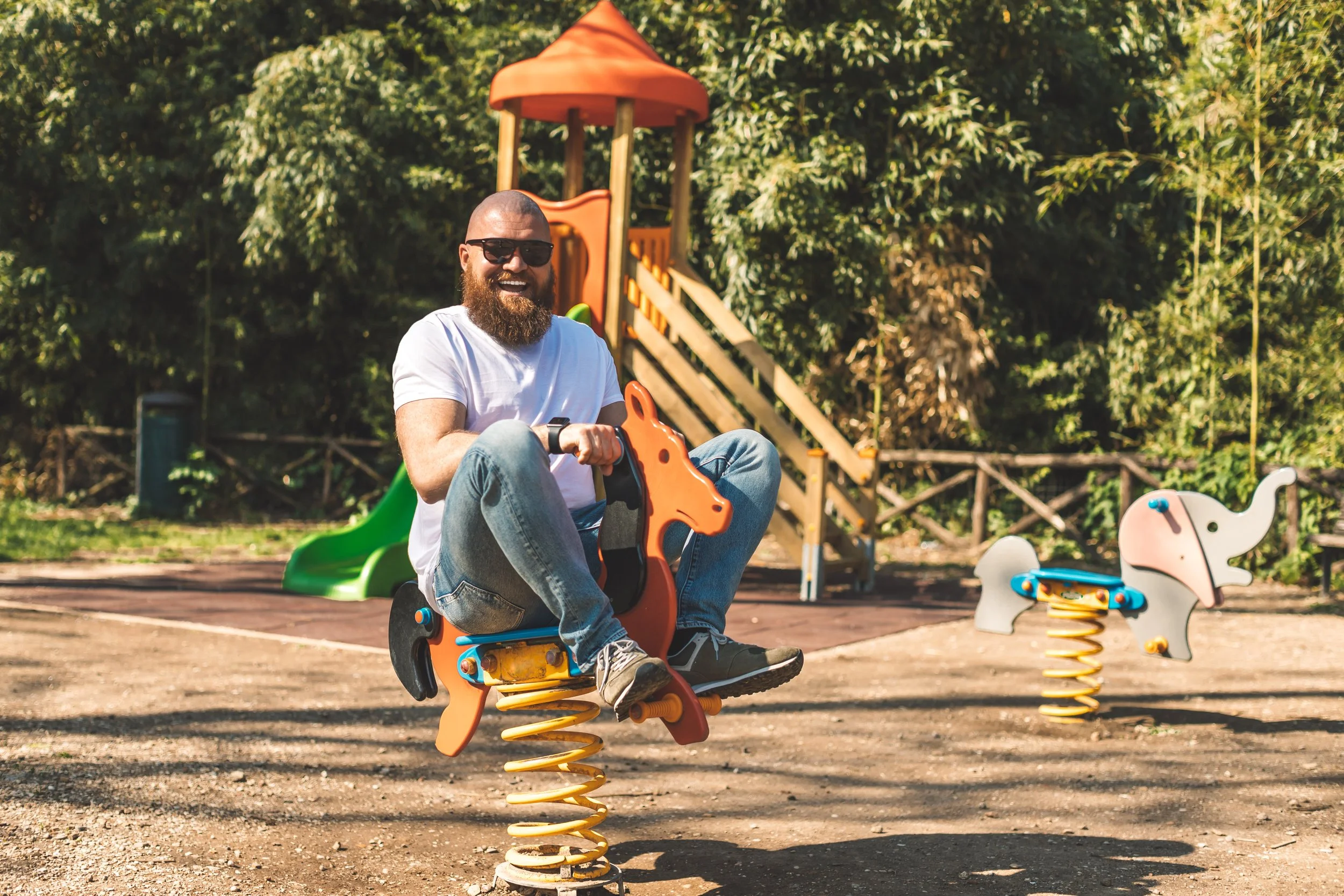
Close your eyes for a moment and remember being a kid at recess.
You’d race your friends across the playground, swing as high as you could, climb the jungle gym, do penny drops from the bars, dig in the dirt, and play new versions of your favorite sports with ever-changing rules. You weren’t thinking about your step count. You weren’t tracking your heart rate. You weren’t counting reps. You were just having fun!
Somewhere along the way, many of us traded recess for routines. As adults, we sometimes tend to take exercise very seriously. We have goals to hit, strict programs to follow, miles to log, and heavier weights to lift. What we often forget is to just move because it feels good.
So when was the last time you had so much fun moving that you forgot you were exercising?
5 Reasons Play Belongs In Your Adult Life
We know play is important for kids. It gives them opportunities to explore, experiment, solve problems, interact with other people, and develop all kinds of physical and cognitive skills. But somewhere between childhood and adulthood, many of us decide that play is no longer a necessary part of life. We have work to do. Errands to run. Laundry to fold. Workouts to complete. Play isn’t on the to-do list because it can seem frivolous compared to all the other things competing for our attention. And while there’s nothing wrong with having a plan, sometimes we forget one of the simplest reasons to move: because it feels good.
But play isn’t just something kids need. Adults benefit from it, too. Here are 5 ways play can improve your health and wellness.
1. It makes exercise more fun.
If traditional fitness feels repetitive, intimidating, or just plain boring, play can completely change the experience.
Think about playing pickleball with a friend versus spending the same amount of time staring at the clock on a cardio machine. You’re still moving, but now you’re also competing, laughing, and strategizing.
That’s one reason playful fitness can be such a great addition to a traditional workout routine. The goal isn’t to eliminate structured exercise. It’s to give yourself more ways to enjoy being active, because if you genuinely enjoy something, you’re a lot more likely to keep doing it.
2. It helps you connect with people.
Play is one of the easiest ways to turn movement into a social experience. Think about what happens when you play a game with someone. You have to communicate, cooperate, encourage each other, adapt when something unexpected happens, and then, of course, laugh when everything goes completely off the rails. It creates a shared experience, and shared experiences build intimacy, camaraderie, and connection. That’s part of what makes activities like tennis, pickleball, and group fitness so much fun. You’re not just exercising next to other people. You’re interacting and collaborating with them.
3. It keeps your brain engaged.
Play isn’t just good for your body. It gives your brain something to do, too. When you try something new or participate in an activity that requires you to react, adapt, or solve problems, you’re asking your brain to stay engaged. It encourages curiosity and creativity, and it gives you permission to experiment instead of always looking for the “right” way to do something. That’s a nice change of pace for those of us who spend most of our days trying to be efficient.
4. It regulates your nervous system.
Adult life can be a lot. Between work, family, errands, responsibilities, notifications, and approximately 67 new things that somehow need to be done today, it’s easy to spend your days in a constant state of “What’s next?” Play gives you a reason to stop thinking about what’s next for a little while and simply tap into a sense of freedom and imagination, which helps regulate your nervous system by lowering cortisol, increasing heart rate variability, and releasing dopamine.
When you’re dancing, playing a game, tossing a Frisbee, or having a friendly competition, you have to pay attention to what’s happening in the moment. It also gives you something adults don’t always make enough room for: enjoyment without an end goal. You don’t have to be productive while you play. You don’t have to accomplish anything. You don’t even have to be particularly good at it. You’re simply having fun.
5. It opens your mind to new possibilities.
Remember how everything seemed possible when you were a kid? On any given Saturday, you could decide you were going to be an astronaut, build a fort in the living room, or spend an entire afternoon figuring out how to climb something that was definitely not designed to be climbed.
When we grow up, we get good at routines. We know what we like, we know what we’re good at, and we tend to stick with it. Play encourages you to try something different.
Maybe you try rollerblading even though you haven’t worn skates since you were 12. Maybe you sign up for a tennis lesson. Maybe you learn a new dance. Maybe you decide you’re going to learn how to do cartwheels again.
You might discover a new hobby. You might meet new people. You might find a completely different way to move your body. You might even discover that you are, in fact, terrible at rollerblading. Either way, you tried something! That willingness to explore and shift perspective can carry over into other parts of your life, too.
How to Add More Play to Your Fitness Routine
Get the kids involved.
Kids are the masters of play, so follow their lead! Head to the park and have a three-legged race. Play tag. Climb up the slide. Race each other to the end of the block. Make up a ridiculous obstacle course in the backyard. Bench press your 5-year-old. Kids love to get silly, so get silly with them!
Take a walk with no agenda
Play doesn’t always have to look like running around with the kids. If climbing trees and swinging from monkey bars doesn’t sound appealing to you, you can still bring play into your life with something as simple as a walk. The caveat is, you’ve got to leave the devices at home.
Don’t track your pace. Don’t count your steps. Don’t try to hit a certain distance. Don’t have a destination in mind. Simply see where your feet take you and allow yourself to be curious and spontaneous instead of constantly trying to optimize your time.
Take a group fitness class
Group fitness is a great place to find the playful side of exercise. Many of Western’s classes incorporate energy, music, movement, and playful fun. For an extra dose of playfulness, try Dance Fitness, In A Minute, or Strong Nation. Plus, keep an eye out for special programs throughout the year, like Funtensity and Shockwave.
Work out with a friend
Everything is more fun with a friend. Even burpees. Find someone who makes you laugh and invite them to work out with you. Try a new class together, challenge each other to a friendly competition, or hop into a group fitness class together.
Try something new at the gym
Do you always head straight for the treadmill, elliptical, or your favorite weight machines? Consider taking a detour. Try balancing on a BOSU ball. Pick up some battle ropes and pretend you’re fighting off a giant sea monster. Push your friend on a sled. Ask a trainer to show you how to use a piece of equipment you’ve never touched before. You might discover a new favorite way to work out.
Add an element of randomness
Not every workout needs to be perfectly planned. Use a deck of cards or a pair of dice to determine your next exercise. Assign different movements to different numbers and let chance decide what happens next. It can turn a routine workout into a little game and keep you on your toes.
Play a sport
Sports are basically structured play for adults, and we may be a little biased, but we think pickleball and tennis are two great options! You’re running, reacting, changing direction, strategizing, and sending some lighthearted smack talk over the net. Check out ways to get involved with tennis and pickleball at Western here.
Dance, dance, dance
People have been dancing for as long as there have been people, and there are lots of great reasons why.
Dance brings together music, movement, coordination, and rhythm, giving your body and brain plenty to work with at the same time. Listening to music can engage the brain’s reward pathways, while coordinating your body with the beat requires your sensory and motor systems to work together. In other words, dancing can give your brain a little more to chew on than simply going through the motions of a workout.
There’s also some fascinating research connecting dance with brain health. One well-known study published in the New England Journal of Medicine looked at whether different leisure activities could influence the risk of dementia in older adults. Researchers considered eleven different activities, including swimming, cycling, golf, and tennis. Of the activities studied, dancing was the only one associated with a lower risk of dementia.
The beauty of dance is that you can make it as structured—or completely unstructured—as you want. Put on your favorite playlist and dance while you cook dinner. Have a living room dance party. Try a ballroom dance class. Or join a Dance Fitness class at Western and let the music do some of the motivating for you.
Head to the park
Enjoy some fresh air and get silly at one of Green Bay’s beautiful parks. You’ll even find some adult playgrounds! Green Isle Fitness Zone in Allouez has 10 workout stations positioned along its trail loop, including equipment for strength and mobility work. Klipstine Park in Ashwaubenon also has a walking and running path with fitness stations along the way, including cardio steppers, climbing ropes, and equipment for stretching and calisthenics.
Choose the playful option
Start looking for small moments of movement where you can choose fun. Neighborhood kids drew a hopscotch course on the sidewalk? Get jumping! Your favorite song comes on? Time to dance! Walking by the lake? Pick up a stone and see how many skips you can get! You don’t have to turn every moment into a workout, but you can look for opportunities to move more playfully throughout your day.
Want Some Guidance Getting Back to Play?
Jump into one of Western’s group fitness classes and let an instructor take the lead. Try tennis or pickleball and discover a new way to play with your friends. Or work with a personal trainer who can create a customized plan around your fitness goals while incorporating more variety, movement, and play.
You don’t need a scheduled recess break in order to play (although we think adult recess should definitely be a thing). Create your own ways to play, and you can add a little touch of recess to your life every day.