
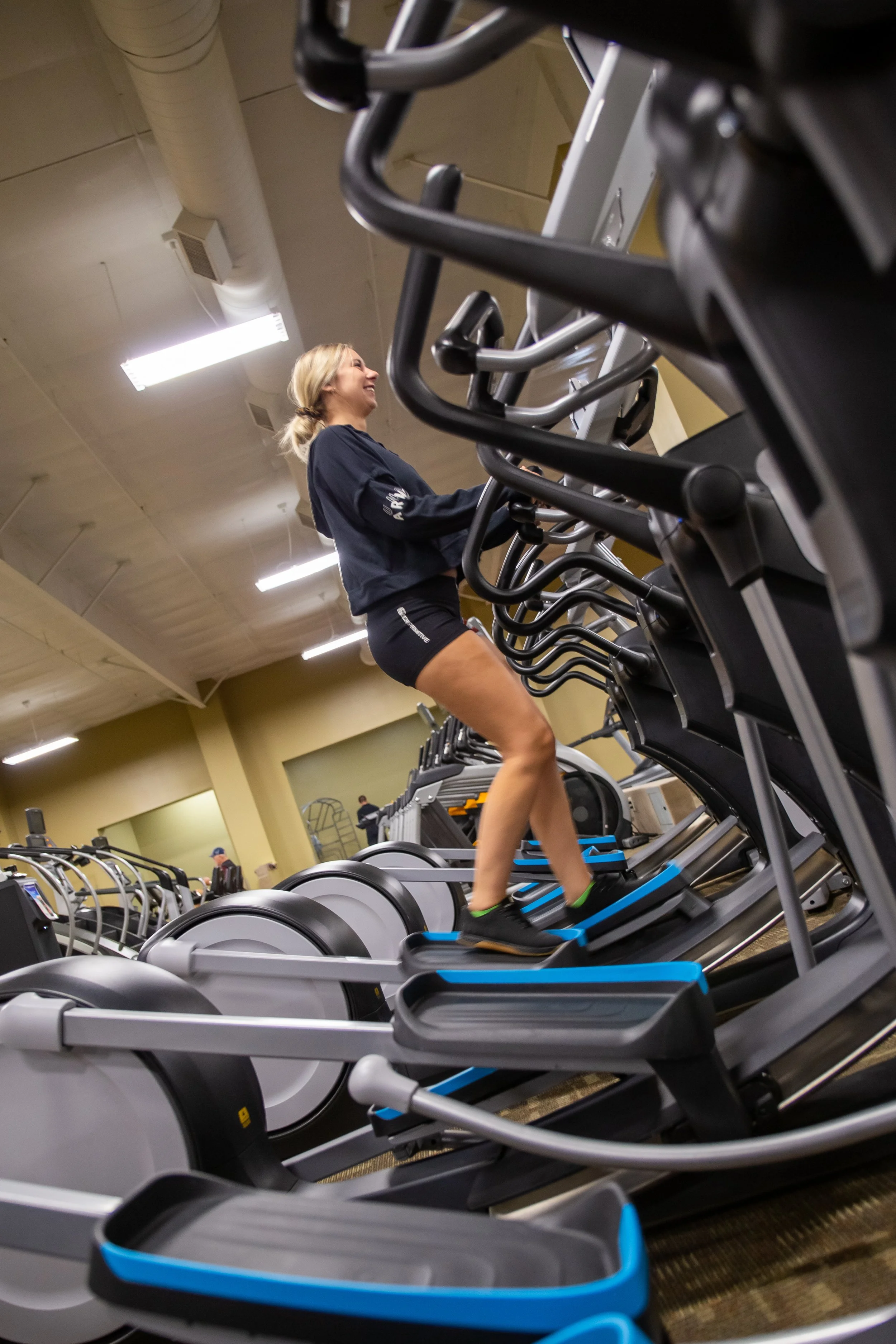
When we hear “low-impact cardio workout,” many of us hear “easy cardio workout,” but “low-impact” doesn’t mean easy. Just hop into cycling class or spend 30 minutes on a rower, and it becomes clear pretty quickly that your heart doesn’t know the difference between low-impact and high-impact.
So what is low-impact cardio?
Simply put, it’s exercise that’s easier on your joints. This makes it an ideal way to get your cardio in even if you are new to exercising, need an active recovery day, have arthritis or joint pain, or are recovering from an injury. Low-impact cardio can also play an important role for athletes or anyone regularly doing athletic training. Even experienced athletes often rely on low-impact workouts to keep building endurance while giving their knees, hips, and ankles a much-needed break.
What counts as a low-impact cardio exercise?
Low-impact cardio is any exercise that uses controlled, fluid movements, as opposed to repetitive pounding or explosive jumping where your joints absorb repeated impact (think: jogging, box jumps, or basketball).
Some popular low-impact exercises include:
Cyclingg
Swimming
Rowing
Climbing
Elliptical training
Now, of course, low-impact exercise isn’t better or worse than high-impact, and both have their place in a regular fitness routine. High-impact exercise also improves bone density, strengthens tendons, and burns calories more quickly than low-impact exercise. The trick is balance. Alternating higher-impact cardio (if able) and lower-impact cardio gives your body time to recover while still improving your cardiovascular fitness.
Why is cardio so important?
Your heart is a muscle. Just like your biceps or your quads, it gets stronger and more efficient when you challenge it consistently. As your heart rate increases during exercise, your heart contracts more efficiently and pumps oxygen-rich blood throughout your body. Your muscles receive the oxygen they need more quickly, which in turn takes stress off the heart.
Over time, regular cardio can:
Lower blood pressure
Improve cholesterol levels
Increase endurance
Improve circulation
Reduce the risk of cardiovascular disease
The American Heart Association recommends at least 150 minutes of moderate-intensity cardio exercise each week. And hitting that goal can reduce your risk of cardiovascular disease by as much as 30%!
Consistently choosing joint-friendly cardio today can also help you stay active and mobile as you age. A stronger heart paired with less wear and tear on your joints is a combination your future self will appreciate.
Get a low-impact cardio workout at Western
If you’re looking for a low-impact workout this week, we’ve got you covered. Check out our group fitness schedule to find a cycling, barre, or pilates class to join, or head out on the fitness floor and hop on a rower or elliptical.